
My grandmother used to watch the kettle. Not in the way people say it, with a sigh, but literally: she would stand at the stove with her arms folded and watch the water change. First the small bubbles clinging to the bottom, then the shiver across the surface, then the rolling boil. She said it was the only part of the morning that belonged to her.
I thought of this last winter, standing in my own kitchen, reading the news on my phone while the kettle boiled and clicked off and went cold. I had been in the room for six minutes. I could not have told you one thing about it.
What attention costs
We talk about attention as though it were a resource to be budgeted: something to protect, allocate, optimise. The metaphor is useful up to a point. But it makes attention sound like money, and money is something you can spend carelessly one day and make up the next. Attention is closer to a muscle, or better still, to a friendship. It responds to being used, and it withers when it is only ever half-given.
The cost of scattered attention is not the lost minutes. It is that nothing you do while distracted ever becomes yours. The meal eaten over a screen, the conversation you answered while composing your reply, the walk you took with a podcast in your ears: they happened, and they left no mark.
The quality of a life is, more than anything, the quality of what it has been attentive to.
A practice of returning
I have stopped trying to concentrate for long stretches. What works better is learning to notice the moment I leave, and to come back without ceremony. The return is the whole skill. Every wander, noticed and corrected, is a repetition, like a bicep curl for a faculty we rarely train on purpose.
Three small habits have helped me:
- Do one thing at the start of each day with nothing else open. Tea, a letter, a page of a book.
- Keep a notebook within reach and write down the distraction instead of acting on it.
- End the evening by recalling one thing you noticed that day, however small.
The smallest unit
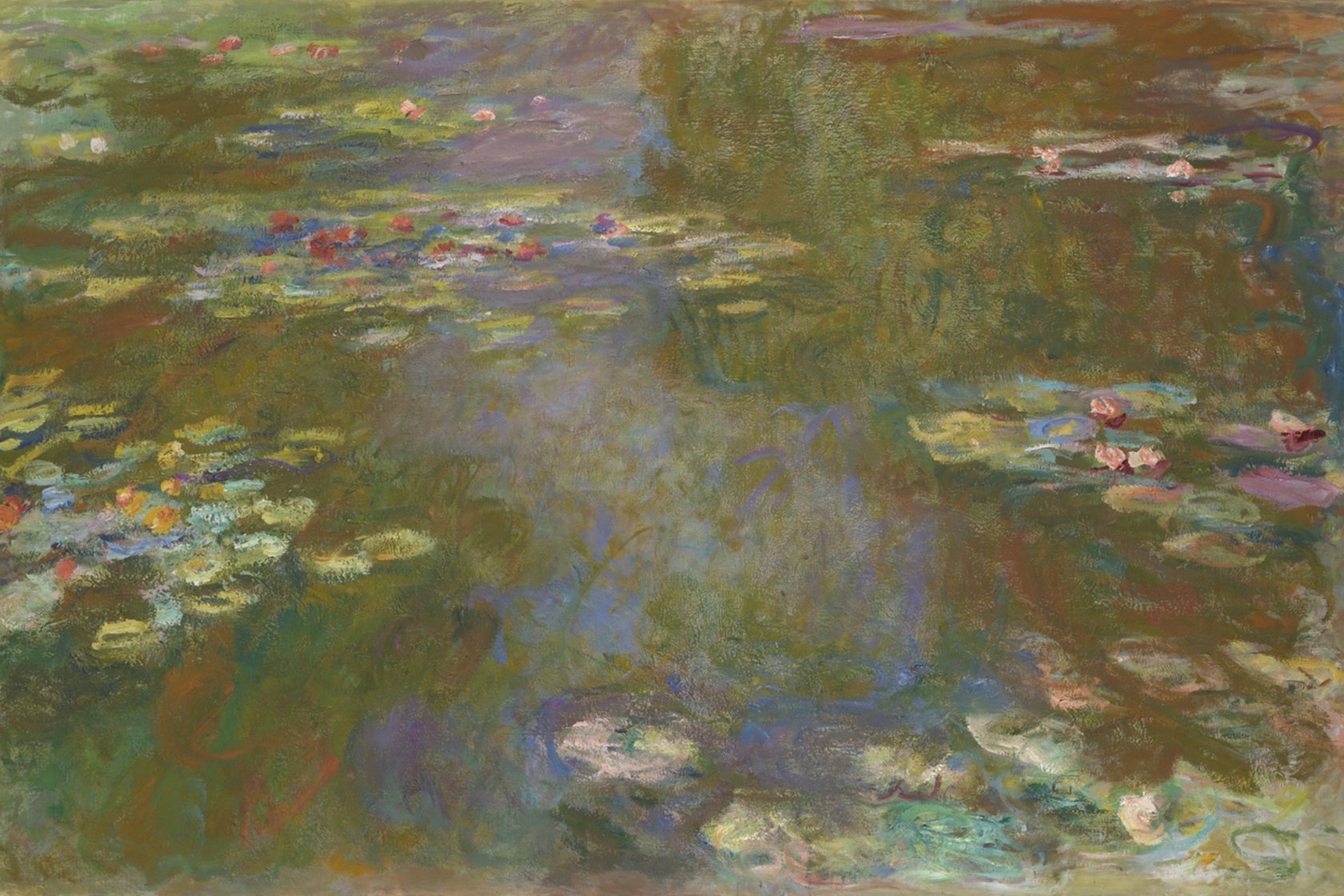
Monet painted the same pond for years, and the paintings are not repetitive. They are what happens when someone keeps looking at one thing long enough that it stops being one thing. That is what I mean by attention: not effort, not willpower, but staying put long enough for the world to become particular.
I have started to think of this as a kind of apprenticeship. You are not trying to arrive anywhere; you are learning the movements of your own mind, the way a potter learns clay. It wanders at predictable moments (after lunch, before something difficult, whenever a message arrives) and each wander is information. Where does it go? What is it avoiding? What does it want that you have not given it?
There is also, I think, an ethical side to this. To give someone your whole attention is the most basic form of respect, and the one we are now worst at. I notice it when a friend puts their phone face down on the table and leaves it there. Nothing has been said, and yet something has been said.
My grandmother would have understood. The kettle, after all, takes about four minutes to boil. It is just long enough.